pr.cns@mak.ac.ug

Mak Researchers Present Findings on Biology Performance to Ministry

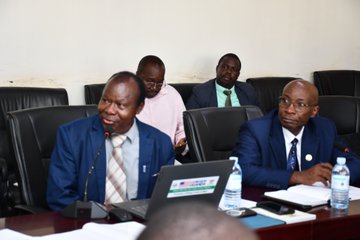
A team of researchers from Makerere University has presented findings of a study on the persistent poor performance in Biology in national examinations to senior officials at the Ministry of Education and Sports.
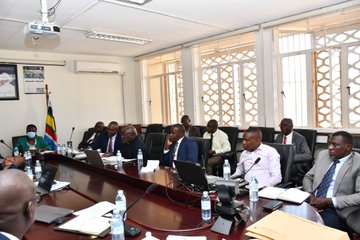
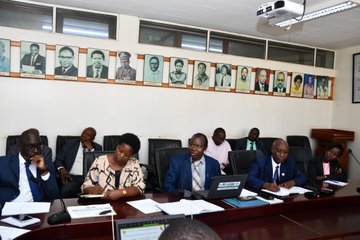
The findings were shared during a dissemination meeting attended by the Ministry’s top management, led by Permanent Secretary Kedrace Turyagenda.
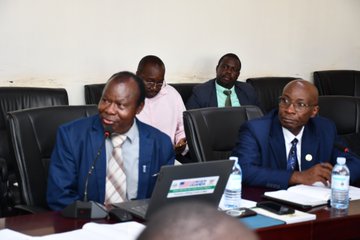
The study, commissioned by the Ministry in 2023, was conducted by researchers from the College of Natural Sciences and the College of Education and External Studies. It was spearheaded by Prof. Fredrick Muyodi as Principal Investigator, alongside Assoc. Prof. Josephine Esaete (Co-Principal Investigator) and Prof. Arthur Tugume, among others.
Titled “Examining the Factors Accounting for Poor Academic Performance in Biology in Uganda’s National Examinations,” the study covered all regions of the country, engaging more than 5,200 respondents across 100 districts through surveys, interviews, and observations.
Key findings
The research identified limited field-based learning and poor digital access as the most critical and consistent challenges affecting both Ordinary and Advanced Level students across all regions.
At the advanced level, the lack of project-based learning was also cited as a significant constraint. Learners reported limited engagement with Biology beyond the classroom, a factor that weakens conceptual understanding and application in examinations.
The study further highlighted the role of community attitudes and perceptions in shaping student performance in the subject.
Recommendations
The researchers recommended increased investment in field-based learning, including field trips and project work, as well as expansion of digital infrastructure to improve access to learning resources.
Other proposed measures include strengthening school laboratory facilities, enhancing teacher capacity through continuous professional development, promoting student engagement through academic clubs and mentorship programmes, and fostering stronger family and community support for science education.
Next steps
The research team is seeking funding to pilot targeted interventions, particularly in regions most affected by the challenges identified, and to develop a monitoring and evaluation framework to guide implementation.
The findings are expected to inform policy and interventions aimed at improving Biology performance and strengthening science education in Uganda.