pr.cns@mak.ac.ug


Mak, CoRE-MATH Project Partners Develop Models to Address Regional Development Challenges

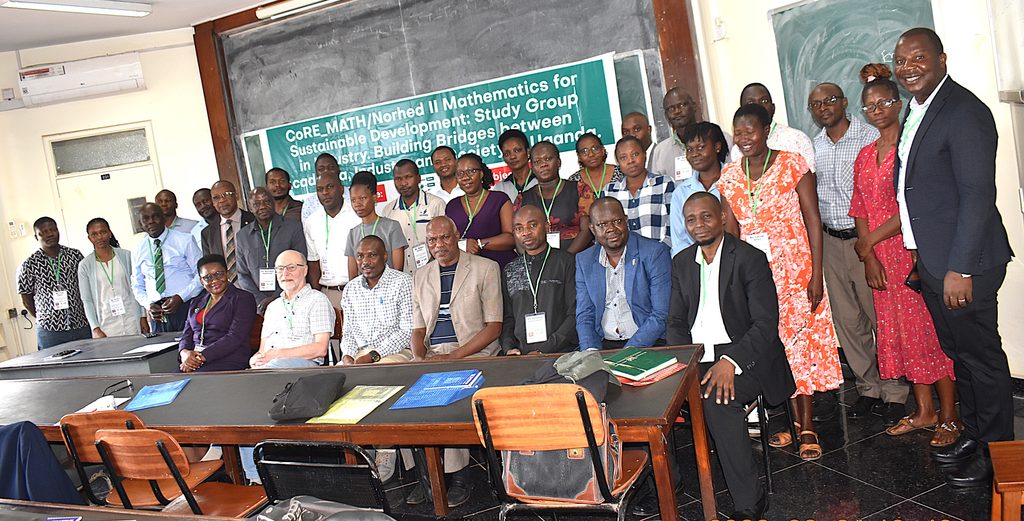
Mathematics is increasingly being applied beyond the classroom to help make sense of complex problems, explore possible solutions and support better decision-making in everyday life. From determining how public funds can sustain pension systems and identifying people at risk of disease to guiding investment decisions and optimising limited space, mathematical modelling provides a powerful way to translate real-world challenges into evidence that can inform action.
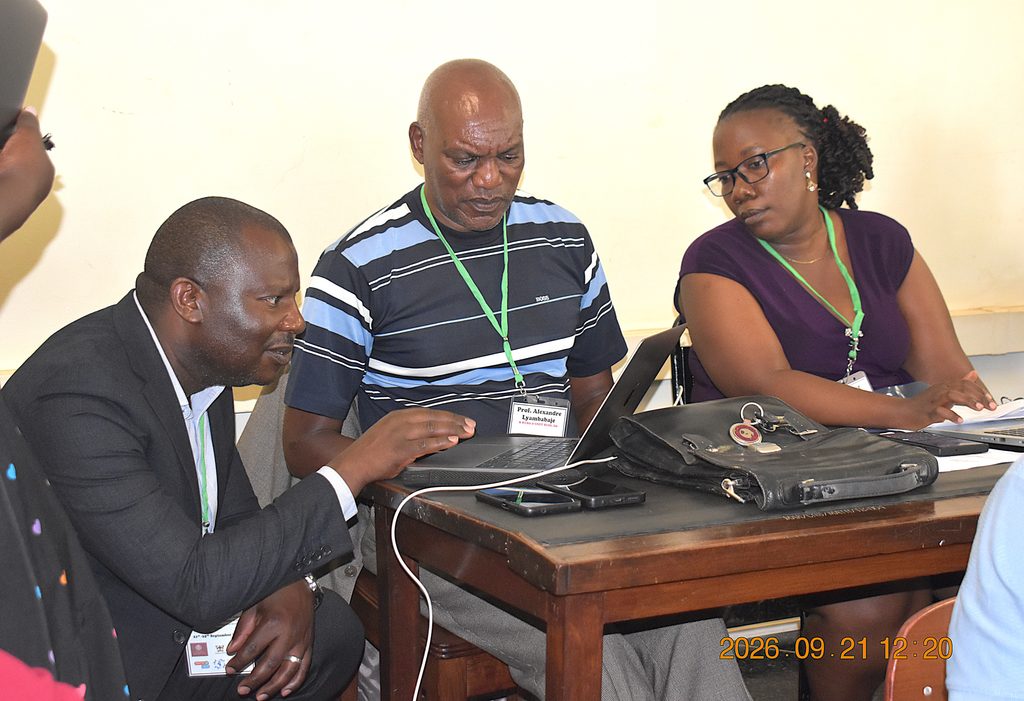
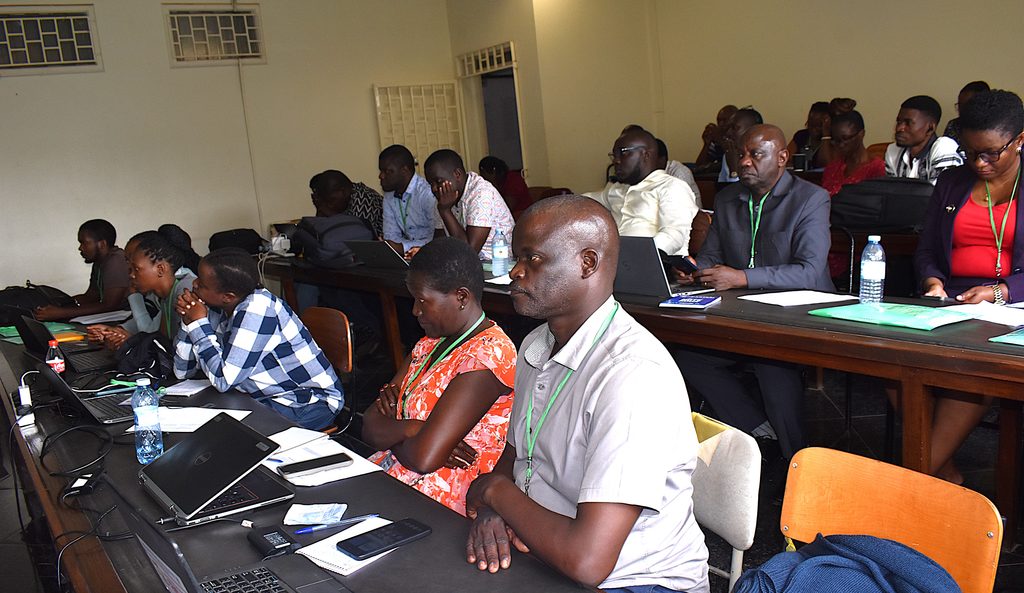
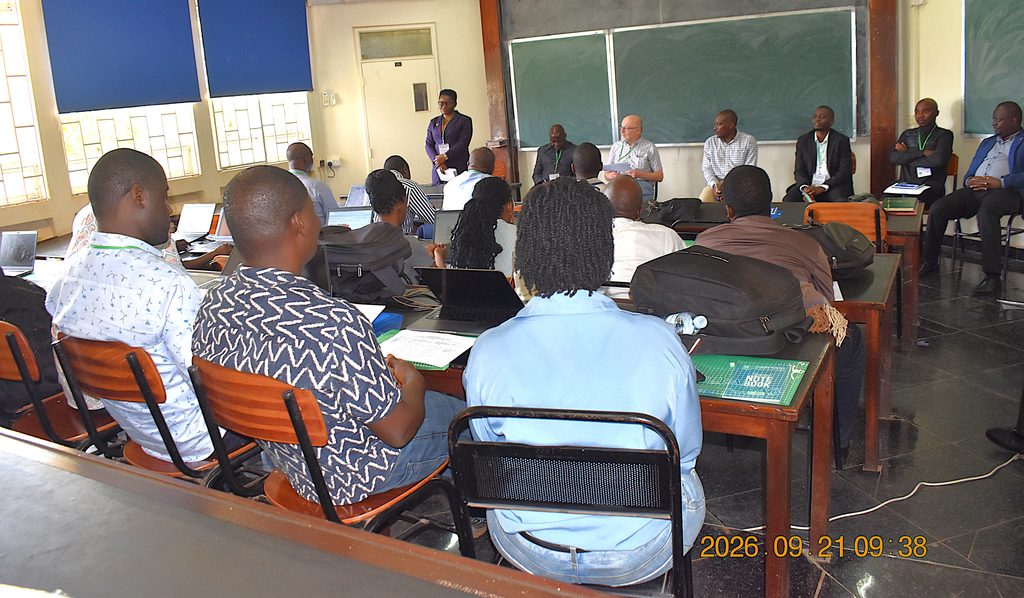
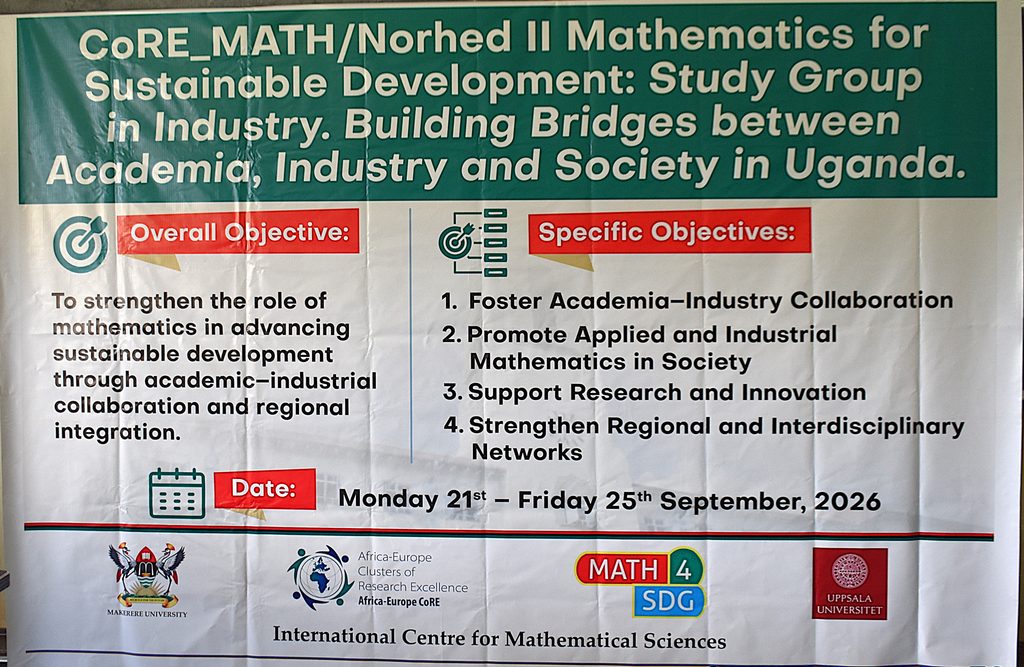
It is this practical application of mathematics that formed the focus of the five-day ICMS-CoRE-MATH Study Group in Industry, held from 21st-25th September 2026 at the Department of Mathematics, Makerere University. The Study Group brought together mathematicians, industry practitioners and regional and international experts to develop mathematical models for addressing challenges across sectors.
Held under the Africa–Europe Cluster of Research Excellence in Mathematics (CoRE-MATH), in collaboration with the NORHED II Mathematics for Sustainable Development (Math4SDG) project, the workshop sought to strengthen the application of mathematical research to development challenges while deepening collaboration between academia, industry and society.
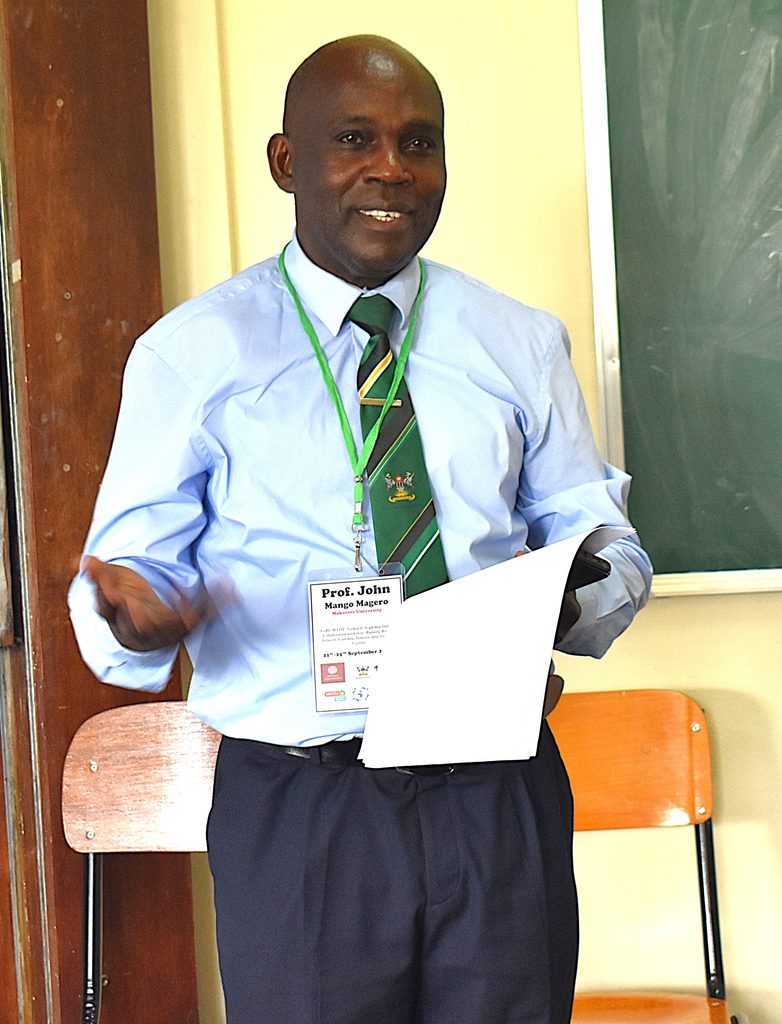
CoRE-MATH is co-led by Prof. John Mango Magero of Makerere University and Prof. Bengt Ove Turesson of the International Science Programme at Uppsala University, Sweden. The initiative brings together leading universities from both continents. African partner institutions include Makerere University, the University of Nairobi, the University of Rwanda, the University of Dar es Salaam, Addis Ababa University, the University of Zambia, and Stellenbosch University. These institutions collaborate with European universities such as Uppsala University, the University of Amsterdam, and the University of Oslo.
Purpose of the Workshop
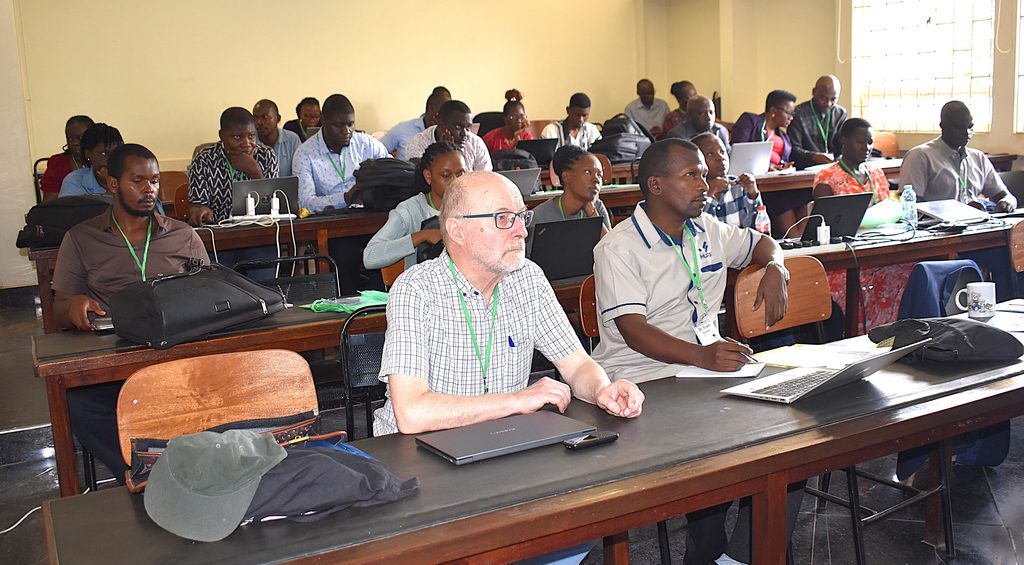
Rather than approaching mathematics as an abstract discipline, the Study Group provided a platform for researchers to work directly on practical problems presented from different sectors. Through mathematical modelling, the researchers sought to break down complex challenges into measurable variables, analyze relationships between them and develop models that can be tested and refined to support decision-making.
Four areas were explored during the Study Group: public-service pension reform, hypertension risk prediction, aquaculture investment and food-court seating optimization.
Modelling Uganda’s Public-Service Pension Transition
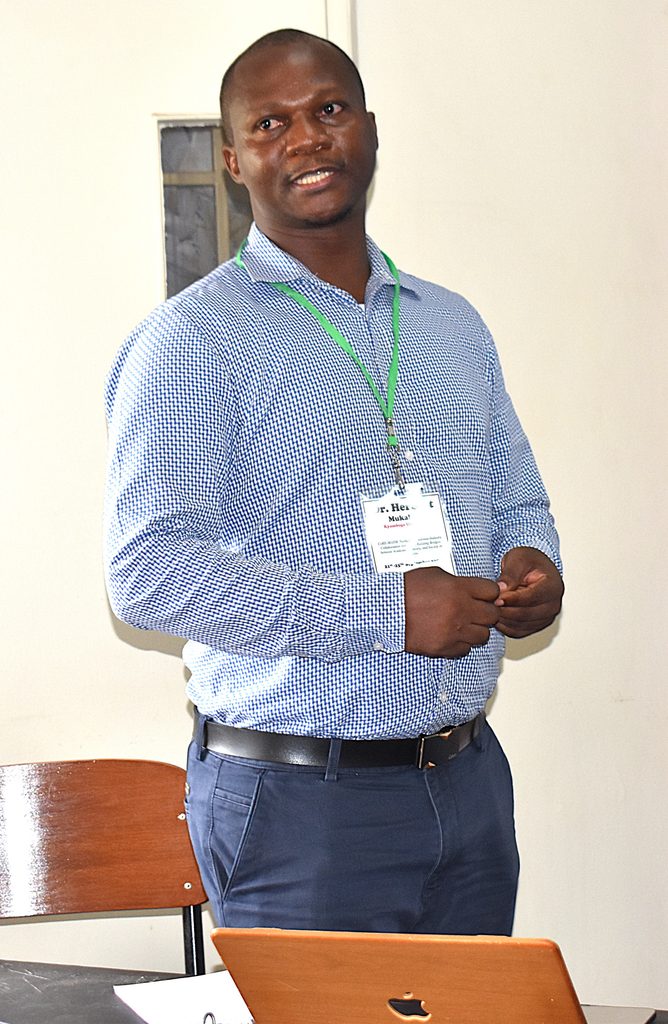
One of the research groups, led by Dr Herbert Mukalazi, developed a mathematical framework to examine the fiscal implications and long-term sustainability of Uganda’s transition to the new public-service pension system.
The model is designed to help Government understand how much the transition to the new public-service pension system could cost over time and plan for these financial demands in advance. It shows how payments to existing pensioners and obligations under the new system may overlap, helping Government anticipate funding needs, avoid financial shortfalls and ensure that pension benefits can continue to be paid as expected.
Preliminary simulations indicate that the transition could place an additional financial burden on the Government, equivalent to approximately 1.14 percent of GDP, with the burden peaking around the 2028/29 financial year. The model also highlights the importance of investment returns to the Fund’s long-term financial position.
Under a scenario assuming a 6 percent annual nominal investment return, the model estimates that Government may need to make an additional contribution equivalent to about 2.14 percent of covered payroll to ensure the pension system has enough cash to meet its obligations throughout the simulated period.
The study illustrates how mathematical modelling can transform a complex public-finance challenge into measurable scenarios, allowing policymakers and other stakeholders to examine how different assumptions and policy choices could affect the pension system over time.
Predicting Hypertension Risk Using Available Health Data
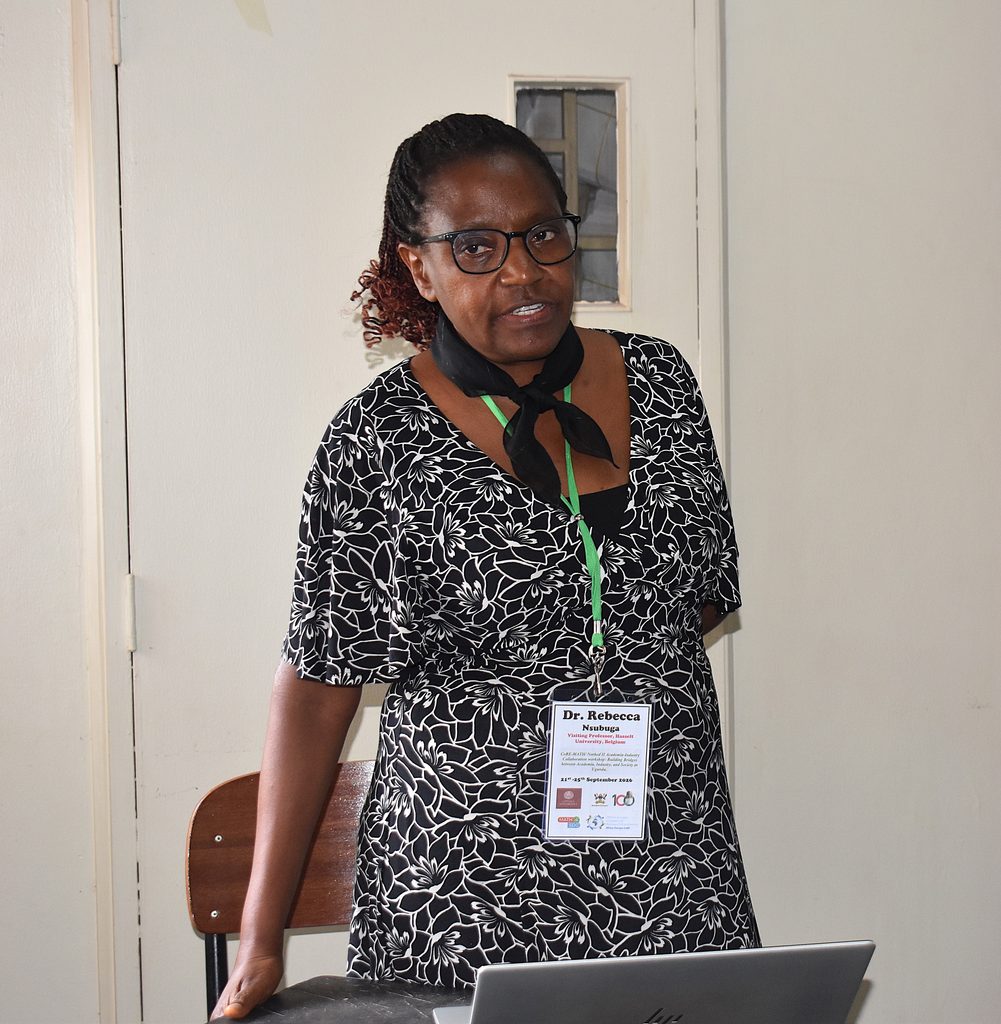
In healthcare, Dr Rebecca N. Nsubuga is leading a team that is developing a mathematical model to predict an individual’s risk of hypertension using available demographic and health data.
The study seeks to categorize individuals into low-, moderate- or high-risk groups using variables including age, sex, residence, education and income, together with anthropometric measures such as body mass index and waist circumference where available.
Using ordinal logistic regression and a generalized ordinal logistic regression approach, the researchers examined how different risk factors relate to progression across the different hypertension-risk categories.
Analysis of 100,000 observations identified significant associations between hypertension risk and several factors, including age, residence, education and income.
The model provides a foundation for developing predictive tools that could support the early identification of people at increased risk of hypertension, potentially enabling more targeted prevention and public-health interventions.
Using Mathematics to Inform Aquaculture Investment
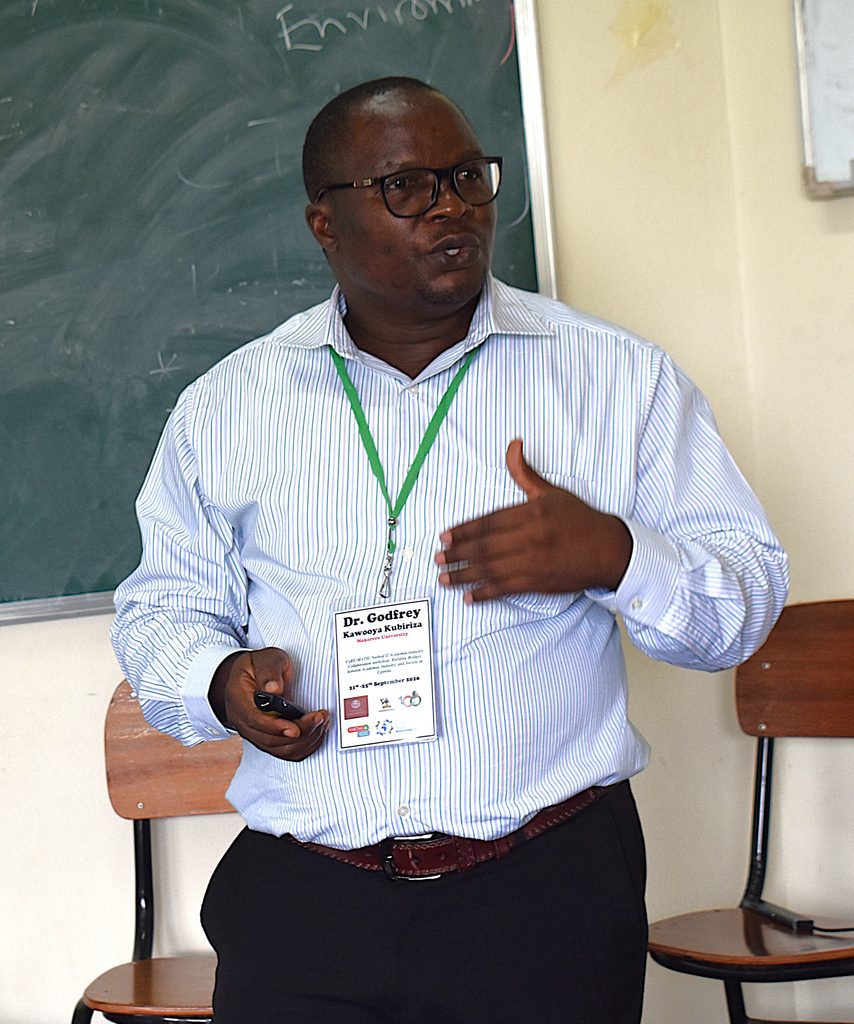
Another study group, led by Dr. Godfrey Kawooya Kubiriza, developed a mathematical model to help investors make more informed decisions about aquaculture investments.
The model brings together key factors such as production costs, expected fish yields, market prices, risks and potential returns to show how changes in these factors could affect the profitability of an investment. This enables investors to examine different scenarios before committing resources and identify how changes in production or market conditions may influence expected returns.
The study demonstrates how mathematical modelling can provide a structured approach to investment planning in aquaculture, where biological, financial and market factors are closely interconnected.
Food-Court Seating Optimization
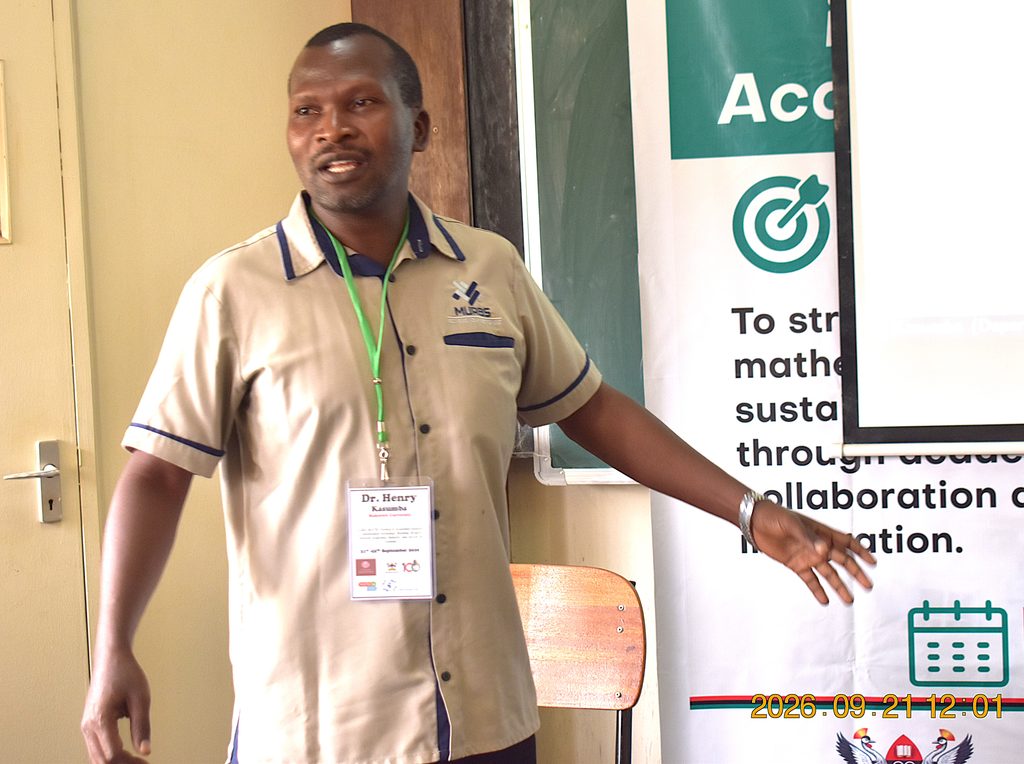
A fourth study, led by Dr Henry Kasumba, focused on food-court seating optimization, demonstrating how mathematical modelling can be applied to everyday operational challenges.
The study explored how available space could be organized to optimize seating arrangements while taking into account competing requirements and spatial constraints.
Although seemingly simple, the problem illustrates a broader application of mathematics: helping organizations make better use of limited resources by identifying arrangements that satisfy multiple requirements as efficiently as possible.
Strengthening the Link Between Mathematics and Society
The Study Group forms part of the broader efforts by Makerere University and its partners to strengthen the connection between mathematical research and real-world development challenges.
By bringing mathematicians and practitioners together to address real-world problems, the initiative supports the development of evidence-based models for decision-making while creating opportunities for further research and postgraduate studies.
The workshop was coordinated by Prof. John Mango Magero and Dr. Alex Behakanira, Senior Lecturer at the Department of Mathematics and member of the academic network contributing to capacity building and collaborative research activities in the CoRE-MATH initiative.
Photo highlights of the workshop: https://drive.google.com/drive/folders/1KbMC4rF0-M3HHD_ofbIdlbEsBUEtkeWf?usp=sharing
More about the Core-MATH initiative: https://news.mak.ac.ug/2026/06/makerere-department-of-mathematics-industry-partners-explore-strategies-to-strengthen-collaboration-in-addressing-societal-challenges/
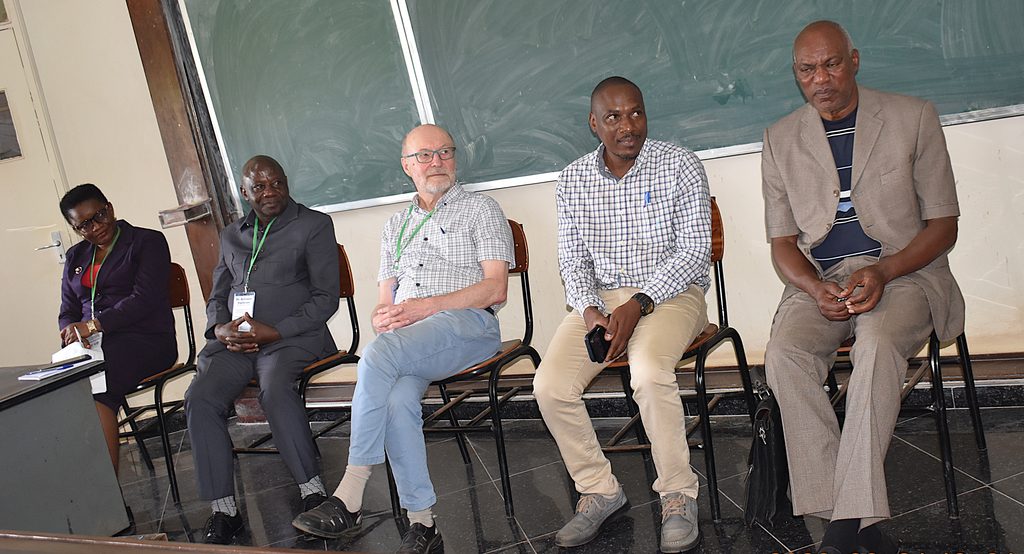
Right-Left: Prof. AlexandreLyambabaje, distinguished mathematician and former Vice Chancellor of the University of Rwanda; Prof. Winston Tumps Ireeta, Principal of the College of Natural Sciences (CoNAS) at Makerere University; European technical expert, Prof. Matti Heilio; Dr. Sylvester Rugeihyamu, Head of the Department of Mathematics at the University of Dar es Salaam in Tanzania; and Dr. Charline Uwilingiyimana, Deputy Vice-Chancellor for Academic and Research (DVCAR) at INES-Ruhengeri, Rwanda