
pr.cns@mak.ac.ug


Makerere University Alumni Turn Plastic Waste into Jobs & Sustainable Products

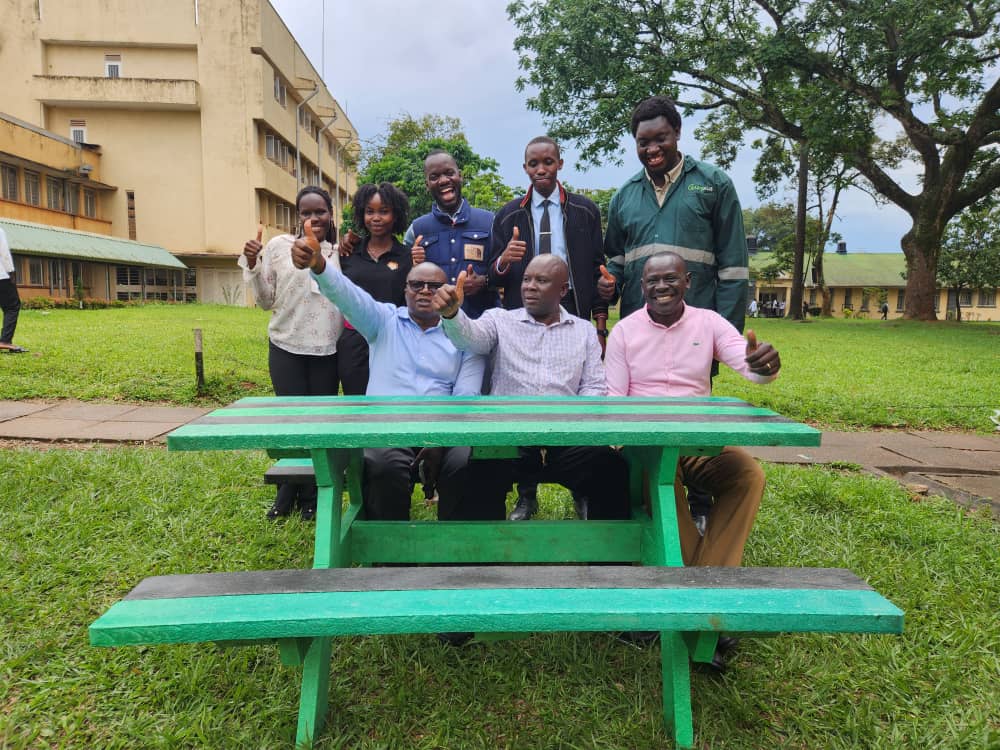
The founders of WastePlus Ltd led by Mr. Sinan Kitagenda with their former Lecturers, Dr. Jamilu E. Ssenku (C) and Dr Samuel Ojelel (R) from the Department of Plant Sciences, Microbiology and Biotechnology, as well as Dr Godfrey Kawooya Kubiriza, Head of the Department of Zoology, Entomology and Fisheries Sciences. The green table is one of the products made by the alumni out of plastic waste
Makerere University alumni are demonstrating how innovation, environmental conservation and entrepreneurship can transform plastic waste into valuable products while creating employment opportunities for communities.
Through WastePlus Ltd, a waste management and recycling enterprise founded by BSc Conservation Biology Makerere alumni from the Department of Plant Sciences, Microbiology and Biotechnology, plastic waste collected from the environment and water bodies is being transformed into furniture and other useful products, providing a practical example of how the circular economy can turn an environmental challenge into an economic opportunity.
Speaking during a visit to Makerere University, Sinan Kitagenda, the CEO and Co-Founder, explained that the initiative was born from the founders’ experiences at the University, where they were involved in waste management before venturing into the private sector along with his Co-Founder, Daniel Kayemba.
“WastePlus Ltd came up between me and my colleagues, all alumni of Makerere, because of the work we were doing. At first, we were doing a lot of waste management at the University. Once we moved out, we ventured further into waste management, but we had to add a component of what we studied,” he said.
The initiative seeks to promote a closed-loop recycling system, in which plastic waste is collected, sorted, recycled and converted into new products rather than being discarded into the environment.
The founders noted that completely eliminating plastic from society may not be realistic, given its widespread use in everyday products such as clothing, shoes, toothbrushes and mattresses. Instead, they advocate for responsible management, recycling and reuse of plastic materials.
“Zero plastic may not be achievable, but step by step, through recycling, we can create closed-loop recycling systems by collecting plastic from the environment and from water bodies,” he explained.
Turning plastic into jobs and business opportunities
Beyond environmental conservation, the initiative is demonstrating the potential of recycling to create employment and stimulate local economies.
According to the founders, production of a single table can directly create employment for more than 35 people along the value chain, with the potential for many more indirect beneficiaries through their households and communities.
One of the tables produced from recycled plastic weighs approximately 160 kilograms, representing thousands of plastic bottles that have been diverted from the environment and given a new life.
The products also demonstrate that recycled materials can have significant commercial value. A table produced from recycled plastic can sell for about Shs900,000, while chairs can fetch approximately Shs350,000, illustrating the business potential embedded in what is often regarded as waste.
The founders encouraged young people to view waste management not simply as an environmental responsibility but as a viable business opportunity.
“What is your waste can be someone else’s raw material. What is someone else’s raw material can be another person’s product. That’s what we think about,” he said.
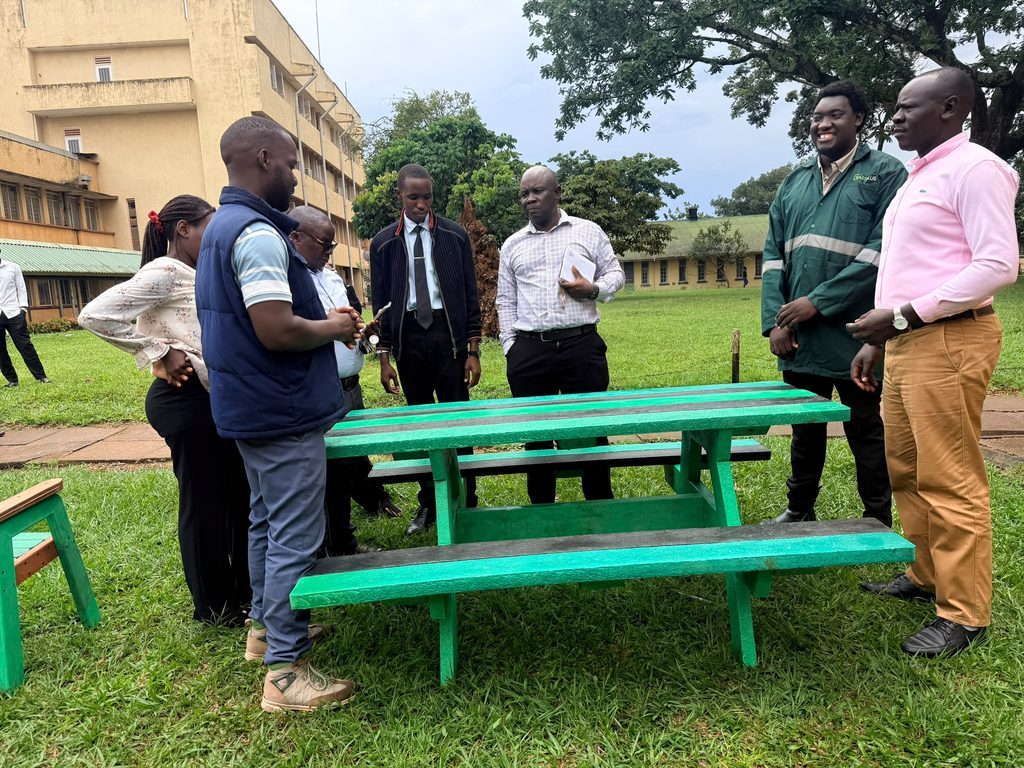
The alumni donated a table to their former Department -Plant Sciences, Microbiology and Biotechnology
From plastic waste to innovative products
Dr. Samuel Ojelel, Patron Makerere University Conservation Biology Students Association (MUCOBA) commended WastePlus for exploring innovative ways of combining plastic waste with biomass to produce lumber materials.
The initiative is experimenting with the use of biomass, including materials from invasive plant species in national parks, combined with recycled plastic to manufacture lumber and other products.
A prototype has already been developed using a mixture of plastic and wood. The founders said further research and testing will be required before the product can be considered for industrial-scale production.
The approach could potentially contribute to addressing two environmental challenges simultaneously-plastic pollution and the accumulation of invasive biomass in protected areas.
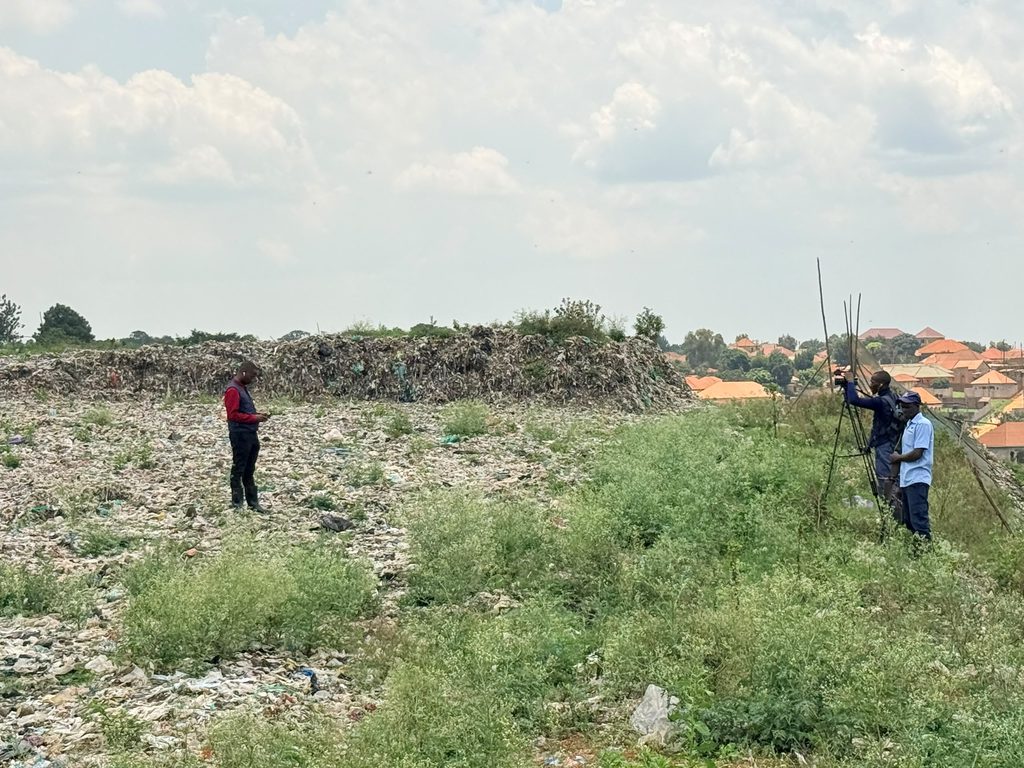
The WastePlus team at one of the waste dumping sites in Kampala
Giving back to Makerere
The alumni said their engagement with Makerere is part of their commitment to giving back to the institution that nurtured their education, skills and entrepreneurial journey.
They also highlighted the role of former interns in the development of some of the technologies and designs used by WastePlus. Some of the turbines and other equipment were designed by former interns under the guidance of the company’s engineers.
The founders said supporting young people to acquire practical skills and encouraging them to transform ideas into solutions remains one of the initiative’s key objectives.
“We are building for the future, but also giving hope to young people out there that the solution you want to develop can start from where you are,” they said.
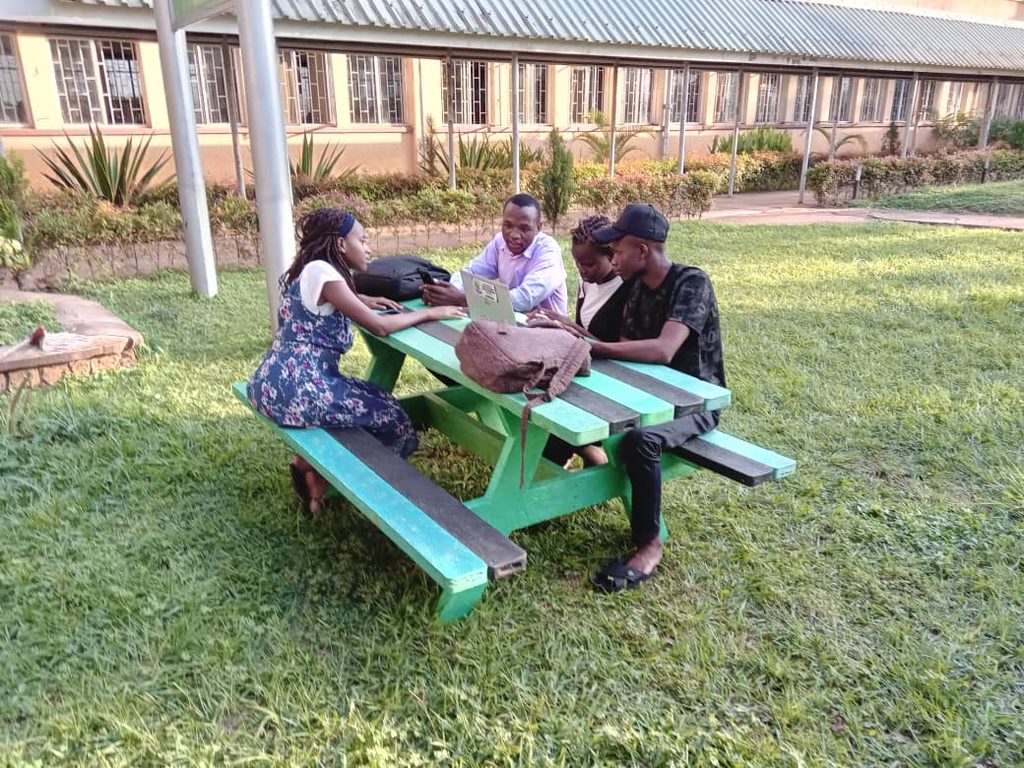
Students from the Department of Plant Sciences, Microbiology and Biotechnology using the table for their revision
University-industry collaboration key to competency-based education
The engagement also underscored the importance of strengthening collaboration between universities and industry as Makerere advances its transition towards competency-based education.
Dr. Godfrey Kawooya Kubiriza, Head, Department of Zoology, Entomology and Fisheries Sciences at Makerere University commended the WastePlus founders for taking the initiative to start their enterprise and urged them to share their experiences with students to inspire innovation and entrepreneurship.
He emphasized that industry possesses valuable practical knowledge and expertise that students need to encounter beyond classroom learning and internships.
“The industry has a lot of knowledge. It has the expertise. It has the real hands-on experience. Beyond the internship, these students need to be exposed to such things,” he said.
Dr Jamilu E. Ssenkuencouraged the alumni to regularly return to the University to share their entrepreneurial journey, including how they started, the challenges they encountered and how the enterprise has grown.
He further urged the founders to document their journey at every stage, noting that their story could inspire future generations of students.
“Document your story. Document it at every stage when you improve and at every stage when you change things. Before you know it, you will need that story in the future because you can grow big-extremely big,” he said.
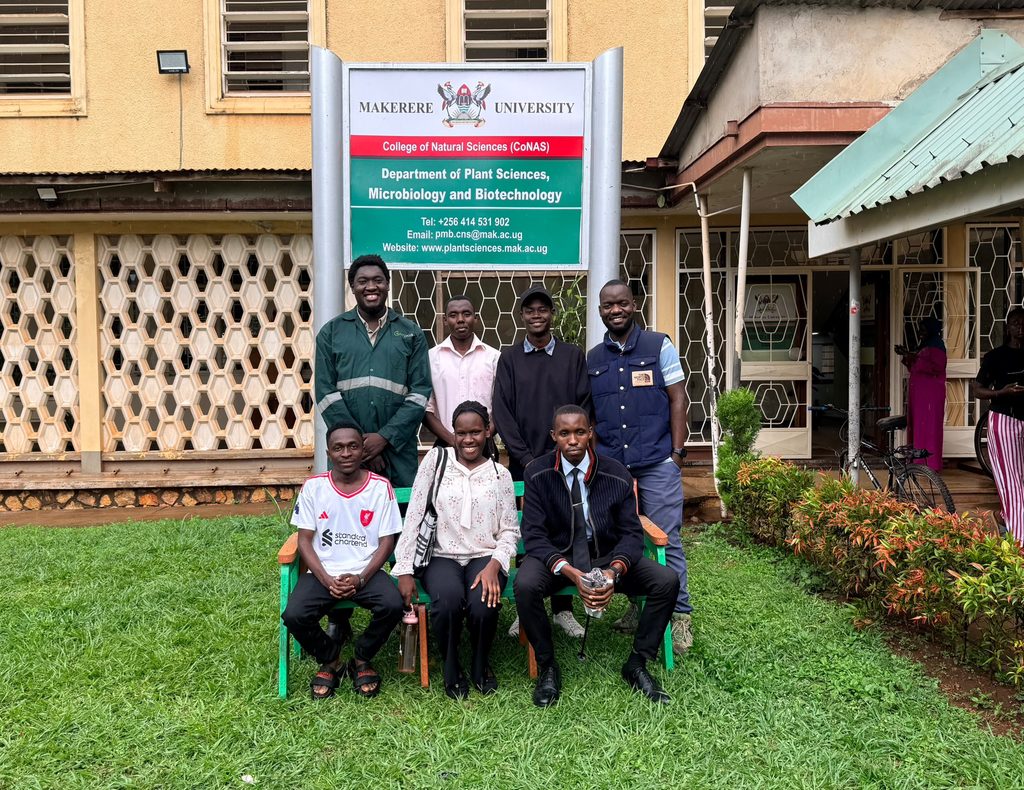
The alumni and some of the current students at the Department of Plant Sciences, Microbiology and Biotechnology
From a small beginning to regional ambitions
Dr Kubiriza also noted that WastePlus had already demonstrated its capacity to undertake major environmental projects, including the manufacture of fencing poles for a 116-kilometre project for Uganda Wildlife Authority and rehabilitation and stabilization work associated with problematic waste sites.
He challenged the founders not to limit their ambitions to Uganda but to position the company to address waste management challenges across East Africa and the wider African continent.
“Waste management is a challenge everywhere,” he noted, urging the entrepreneurs to think beyond the Ugandan market.
He also emphasized the importance of integrity, teamwork and perseverance in building sustainable African enterprises, cautioning the founders against allowing disagreements or short-term gains to undermine their long-term vision.
Building a circular economy
The WastePlus initiative reflects a growing recognition that environmental conservation and economic development can be pursued together. By collecting plastic waste, training communities in sorting and recycling, developing innovative products and creating markets for recycled materials, the initiative is demonstrating the practical value of the circular economy.
The founders called for a values-based approach to waste management, where communities are taught not only to stop littering but also to understand the economic and environmental value of materials that are often discarded.